Marandi: US war on Iran weakening Washington's own allies | Exclusive
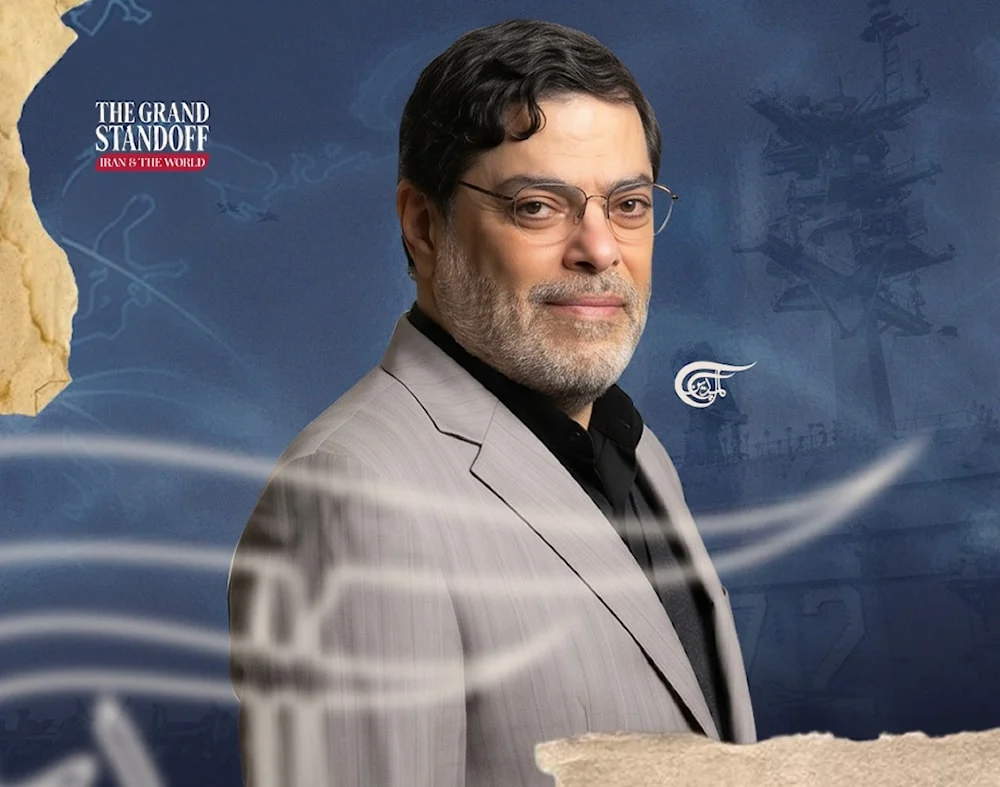
Saudi Arabia’s involvement in the US-Israeli war on Iran and its renewed attacks on Yemenare exposing the kingdom to mounting economic and military pressure, Iranian Professor Mohammad Marandi said, arguing that Washington’s campaign is weakening the regional allies supporting it.
Speaking on Al Mayadeen’s The Grand Standoff: Iran and the World on Saturday, Marandi said the dependence of several Gulf states on oil and natural gas leaves them particularly vulnerable to a prolonged confrontation, while Iran has prepared to sustain resistance through both economic pressure and renewed military escalation.
He argued that hosting US forces and assisting Washington’s war effort had exposed those countries to retaliation, with Saudi Arabia compounding its vulnerability by escalating against Yemen.
“They live in glass palaces, and yet they continue to throw rocks at the Iranian people, at the Yemeni people, at the Iraqi people, and they then have to watch their palaces shatter,” he said.
Saudi Arabia faces pressure on multiple fronts
Marandi described Riyadh’s decision to intensify its war on Yemen while already involved in the confrontation with Iran as “utter foolishness", saying it had placed the kingdom under pressure on several fronts.
He maintained that damage to Saudi facilities, disruption to exports, and heightened uncertainty had weakened the investment environment, while the costs of war and large development projects had further strained the kingdom’s resources.
According to Marandi, Saudi Arabia’s reliance on oil revenues makes sustained attacks on its economic assets especially consequential. He argued that Iran and Yemen were better positioned to endure a prolonged confrontation because their ability to sustain resistance was less dependent on uninterrupted energy exports.
He also warned that any renewed US assault on Iran’s critical infrastructure could provoke extensive retaliation against infrastructure in countries assisting Washington.
“The smart thing for them to do would be to exit this foolish coalition and to repair its ties with the people of Yemen and the people of Iran,” he said.
Gaza remains central to the confrontation
Marandi placed the regional confrontation within the broader struggle against the Israeli genocide in Gaza, arguing that Iran, Yemen, Hezbollah, and the Iraqi Resistance had faced US pressure because of their support for the Palestinian people.
“This whole conflict is really about the genocide in Gaza,” he said.
He accused regional governments aligned with Washington of enabling its policies while avoiding the sanctions and military pressure directed at members of the Axis of Resistance.
Within that confrontation, he identified the Strait of Hormuz and Bab al-Mandab as important sources of leverage for the Resistance, linking their strategic significance to the ability to impose costs on Washington and its allies.
Marandi also attributed the expansion of support for Yemen to its position on Palestine. He argued that people across Yemen "recognize who is standing with Trump and the Israeli regime and who is standing with the Palestinian people, who is truly supportive of the victims of genocide in Palestine and who is truly supportive of Trump, who gives the Trump regime support and strengthens its hand in the face of the opponents of the Israeli regime."
Five scenarios for the confrontation with Washington
Turning to the future of the war, Marandi outlined five broad scenarios, ranging from a major US escalation to Washington implementing the memorandum of understanding referenced during the interview.
The first would involve renewed US attacks targeting Iranian infrastructure, including oil facilities and power plants. Marandi predicted that Iran would respond with extensive strikes against countries hosting US bases and supporting the war, potentially disrupting oil and gas flows through the Strait of Hormuz for years.
A second scenario would involve a more limited resumption of US military attacks. Even then, he said, Tehran would respond forcefully, with further consequences affecting regional energy exports and the global economy.
Under that scenario, Marandi predicted that the limited oil shipments still passing through Hormuz would stop, increasing pressure on both Washington and its regional partners.
The third possibility was a continuation of the present situation, which he argued would prolong economic damage without resolving the confrontation.
“Trump can pretend that the Strait of Hormuz is open, but if it was truly open, he wouldn't be threatening to destroy Iran,” he said.
The fourth scenario involves the United States attempting to disengage without fulfilling its commitments. Marandi argued that such a move would not automatically restore normal passage through Hormuz, saying that Iran had tied normalization to US implementation of the memorandum.
The fifth possibility was Washington carrying out those obligations, an outcome he described as being in US interests but one he did not currently expect.
Iran preparing for a prolonged war
Marandi said Iran had adjusted its economic policies for wartime conditions and was preparing for a confrontation that could continue through the remainder of Trump’s presidency.
At the same time, he said, Tehran has prepared for an intense military escalation and retained advantages through its defensive preparations, retaliatory capabilities, and ability to withstand sustained pressure.
He described Iran’s approach to Hormuz as a balancing act: maintaining pressure on Washington through restricted energy flows while seeking to limit the damage to China and other friendly economies.
According to Marandi, that approach could change if the United States escalated further, exposing Washington’s regional partners to greater economic and military costs.
“But if the Americans push harder, then the Iranians will push harder,” he said.
Marandi also argued that successive US wars, overseas military commitments, and economic mismanagement had weakened Washington’s ability to sustain another prolonged confrontation.
He said Israeli influence over US policy was one explanation for the continuation of the war, while also suggesting that Trump’s unwillingness to acknowledge failure could be contributing to his refusal to change course. He acknowledged that the precise reasons remained uncertain.
Midterm losses could complicate Trump’s war policy
The Iranian academic said the economic consequences of the war could intensify domestic political pressure on Trump as the United States approaches the midterm elections.
A Republican loss of the House of Representatives, particularly if accompanied by a loss of the Senate, would make it harder for Trump to pursue his agenda and could reduce the priority given to continuing the war, he argued.
However, he cautioned against assuming that Democratic gains would necessarily bring the confrontation to an end.
“It's not as if the Democrats are lovers of peace. Remember, the genocide in Gaza started under the Democrats,” Marandi said.
Marandi stressed that Iran’s preparations did not depend on a particular election result. While political setbacks could complicate Trump’s position, Tehran was preparing for a much longer struggle.
Iraq must regain control over its oil wealth
Addressing Iraq, he argued that ending the US military presence would remain insufficient without also challenging Washington’s financial influence over the country.
He accused the United States of using its control over arrangements governing Iraqi oil revenues to constrain Baghdad’s sovereignty, calling on Iraqis to maintain pressure until they secured control over their national wealth.
Marandi credited Iraqis with defeating ISIS and pressing for an end to the US military presence, but said those achievements needed to be accompanied by greater economic independence.
He also criticized restrictions affecting flights between Iraq and Iran, questioning why Iranian airlines should face barriers to operating routes to Baghdad and other Iraqi destinations.
Linking the issue to the two peoples’ shared fight against ISIS, he argued that Baghdad should resist US pressure on its relations with Tehran.
Marandi further warned that Israeli territorial ambitions posed a threat to Iraq and the wider region, arguing that Washington’s support for “Israel” should shape how regional governments assess their relationship with the United States.
Read more: US made proposals through intermediaries, contrary to claims: Ghalibaf